 Sunglasstest
Sunglasses for Your Face Shape: A Guide, Not a Rule
Face-shape advice is a useful shortlist and a poor verdict. The contrast principle behind every recommendation, what suits each shape, and the three things that override it.
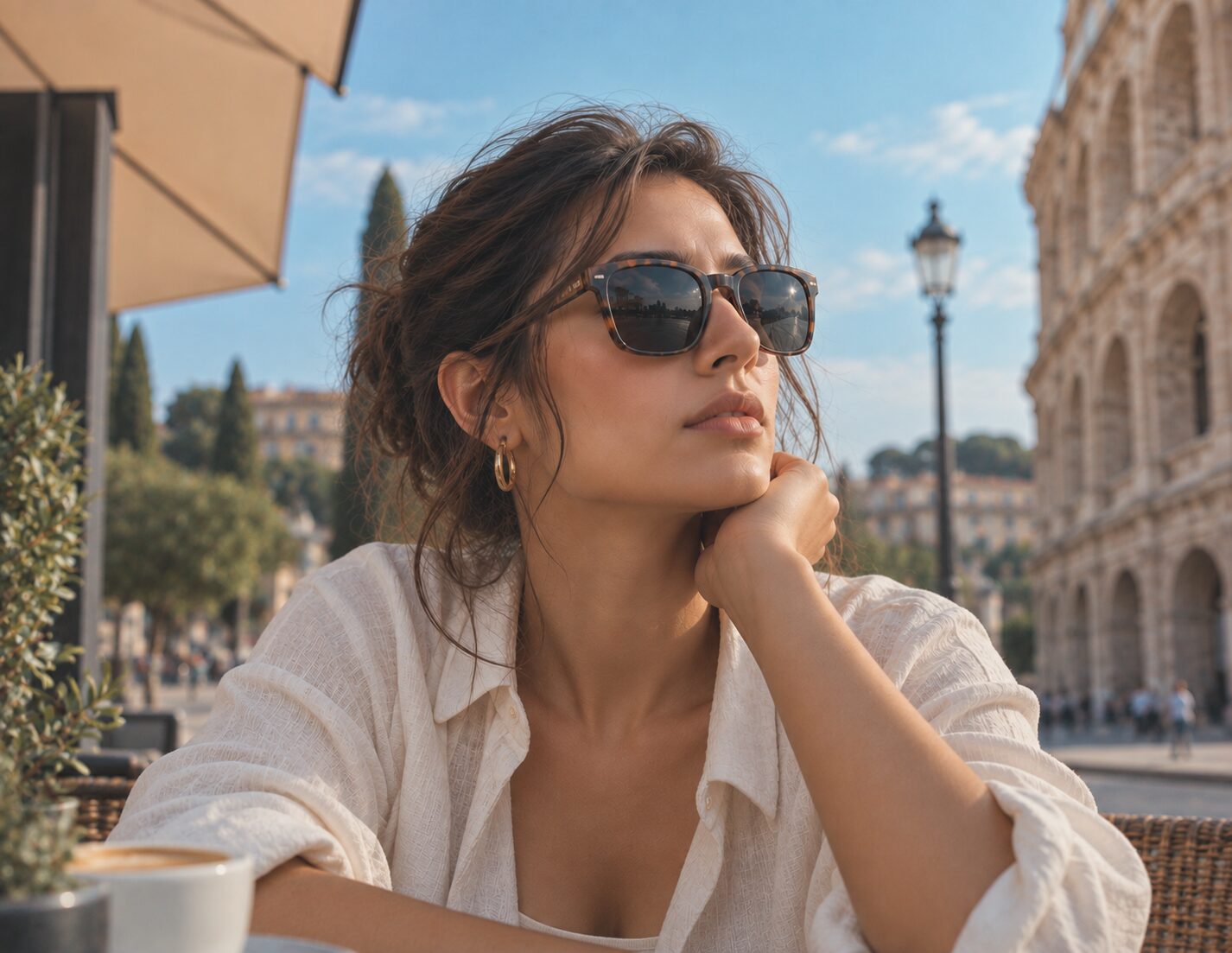
Face shape is the most repeated rule in eyewear and the most overstated. It is a useful starting point and a poor finishing point: scale and fit decide whether a frame works far more often than geometry does. Used as a shortlist rather than a law, though, it saves a lot of time.
The one principle underneath all of it
Contrast. A frame that opposes the dominant line of your face creates definition; a frame that repeats it amplifies what is already there.
Soft, curved features gain structure from angular frames. Strong, angular features soften under curves. That single idea generates every recommendation below, and if you remember nothing else it will get you most of the way.
Working out your shape
Face straight into a mirror, hair back, and look at two things: whether your face is noticeably longer than it is wide, and whether the lines of your jaw and hairline are angular or rounded.
Most people are a blend, and the blend is normal. If you cannot decide between two, you almost certainly sit between them, and frames suiting either will work.
Round
Similar width and length, soft jaw, fullest at the cheeks.
Angular frames add the definition the face does not supply itself – rectangles, squares, wayfarer shapes, anything with a defined browline. Frames slightly wider than the widest part of the face create the impression of length.
Avoid small round frames, which repeat the face shape at a smaller scale and emphasise it.
Square
Strong jaw, broad forehead, width and length fairly close.
Curves soften the angles – rounds, ovals, aviators, panto shapes. Frames with a slightly rounded upper edge work particularly well because they break the horizontal line of a strong brow.
Avoid heavy square frames, which stack angle on angle.
Oval
Longer than wide, balanced proportions, gently curved jaw. The genuinely flexible shape – most styles work.
The one real caution is scale. Oversized frames overwhelm a face that has no dominant feature to balance them, and very small frames look lost. Aim for frames roughly as wide as the broadest part of your face.
Heart-shaped
Wider at the forehead and cheekbones, narrowing to a defined chin.
The aim is to avoid adding weight at the top. Frames that are wider at the bottom than the top balance the proportions – rimless and semi-rimless work well, as do light metals and rounded shapes. Aviators are a reliable choice here.
Avoid heavy top bars and decorated upper rims.
Oblong or rectangular
Noticeably longer than wide, with a straight cheek line.
Depth is what helps – taller lenses break the vertical run of the face into sections and make it read shorter. Frames with decorative or contrasting temples draw the eye sideways, which does the same job.
Avoid narrow, shallow frames, which exaggerate length.
Where the rules stop being useful
Three things override face shape every time.
Scale. A frame proportioned to your face beats a correctly-shaped frame of the wrong size, always. Wide frames on a narrow face look wrong regardless of geometry.
Fit. A frame that slides down your nose or pinches your temples is the wrong frame whatever shape it is. Bridge fit in particular is not negotiable.
Your nose. Where the bridge sits changes the apparent proportions of your face more than the lens outline does, and it is rarely mentioned in face-shape guides at all.
Use it as a filter, not a verdict
Face shape narrows a wall of a hundred frames to a dozen worth trying. That is its value, and it is real.
But the frame you should buy is the one that fits, that you will actually wear, and that you like when you see a photograph of yourself in it. If something outside your category looks right, it is right – the rule is a heuristic, and plenty of people wear the supposedly wrong shape extremely well.
Continue reading
More from Style & Trends

Most Instagrammable Luxury Sunglasses of the Year
The luxury eyewear market is no longer solely about meticulous German engineering or the heritage of Italian artigianato. Today, a significant portion of a frame's value is derived…
Trending Unisex Luxury Sunglasses Styles
The world of luxury eyewear is rarely static. While the classic shapes—the Aviator, the Wayfarer, the Panto—form the bedrock of any discerning collection, the true mark of a…
